
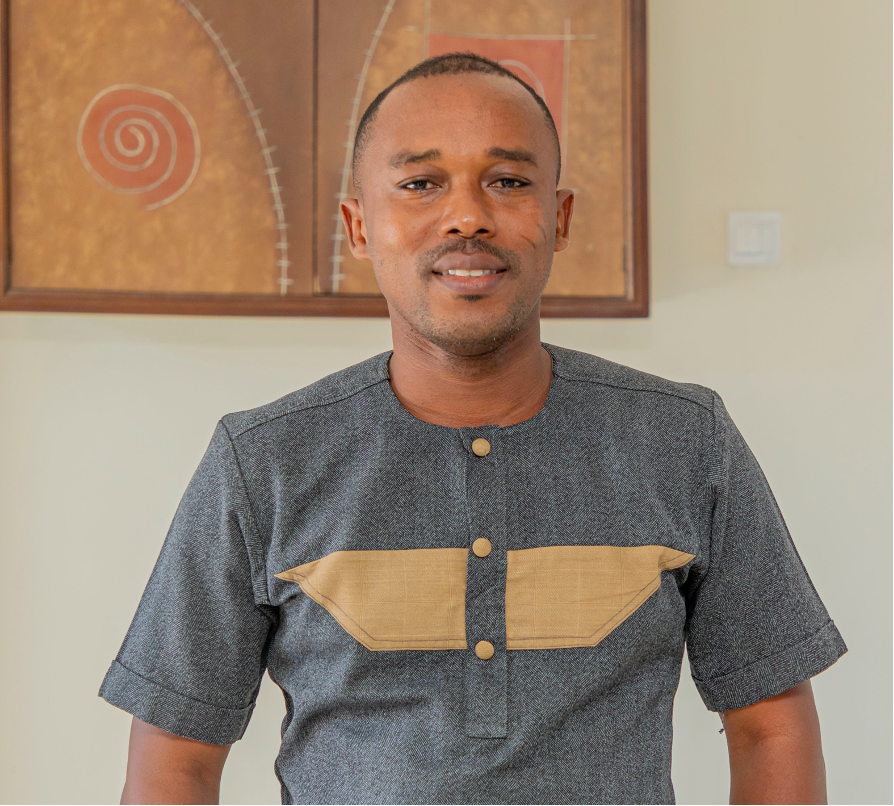
Dr. Linus Kweku Labik of the Department of Physics has been awarded a prestigious research grant from Development in Africa with Radio Astronomy (DARA) to support his work on understanding how planets form.
The award marks another milestone in Dr. Labik’s academic journey, following his transition from Materials Science to Astrophysics through the Simons Foundation Pivot Fellowship in 2024.
Under the fellowship, Dr. Labik spent a year at the University of Leeds, where he trained under Melvin Hoare, a Professor of Astronomy at the School of Physics and Astronomy. There, he built strong expertise in astrophysics, applying advanced simulation and modelling techniques to study the earliest stages of planetary formation.
His research focuses on how porosity influences the formation of planets, an emerging area of interest in astrophysical studies that could reshape understanding of how planetary systems develop.
Dr. Labik recently presented his findings at the Simons Foundation Pivot Fellows Meeting in New York, where he engaged with leading researchers and shared key insights from his work.
The DARA grant is expected to enable him to deepen this research, expand collaborations, and contribute significantly to global efforts aimed at understanding planet formation. It also highlights the growing research impact of the Department of Physics in cutting-edge fields such as astrophysics.
The achievement underscores the Department’s commitment to supporting interdisciplinary research and nurturing scientists who are making meaningful contributions on the global stage.
Established in 2015, the Development in Africa with Radio Astronomy (DARA) is a capacity-building initiative that trains African scientists and engineers in radio astronomy and related technologies.
It supports the broader vision of expanding radio astronomy expertise across Africa through partnerships linked to the Square Kilometre Array (SKA).


